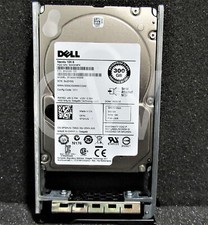
Dell 300GB 10K RPM SAS 6Gb/s Enterprise Hard Drive
Model: MBF2300RC | Dell PNs: 740Y7, 0740Y7 | 300GB Capacity | 10K RPM
The Dell 740Y7 (Toshiba MBF2RC series platform) is a high-reliability, 2.5-inch enterprise hard drive designed for legacy Dell PowerEdge and PowerVault systems. This drive was a pioneer in the transition to 6Gb/s SAS speeds in the small form factor category. Engineered for 24/7 mission-critical availability, it offers a proven mechanical design that balances energy efficiency with the consistent IOPS required for mainstream server applications.
📊 Technical Specifications
Capacity: 💾 300 GB
Interface: ⚡ SAS 6Gb/s (Dual Port)
Spindle Speed: 🏎️ 10,000 RPM
Cache: 🧠 16 MB
Form Factor: 📏 2.5-inch SFF
MTBF: 🛡️ 1.6 Million Hours
Sector Format: 💾 512n (Native)
Recording Technology: 🖋️ CMR (Conventional Magnetic Recording)
✅ Product Overview
Toshiba Enterprise Engineering: Built on the MBF2RC platform, featuring an enhanced power-condition state that allows the drive to spin at lower speeds during idle periods, reducing power consumption without sacrificing quick recovery to full performance.
Compact Reliability: Optimized for high-density server environments where space and thermal management are at a premium. The 2.5" SFF design allows for more drives—and thus more IOPS—per rack unit compared to 3.5" alternatives.
Dual-Port SAS Connectivity: Supports dual-port functionality for high-availability systems, allowing for redundant data paths and failover capabilities essential for enterprise-class uptime.
📦 Compatibility & Use Case
Target Systems: Optimized for 11th and 12th Generation Dell PowerEdge servers (R610, R710, R620, R720) and PowerVault storage arrays (MD1120, MD1220).
Ideal Workloads: Standard server boot drives, file and print servers, mid-range transactional applications, and RAID-5/6 storage pools.
⚠️ Compatibility Note: This is a standard 15mm z-height SFF drive. It utilizes a 512n (512 native) sector format, ensuring it is a "plug-and-play" replacement for legacy Dell SAS backplanes and older operating systems that do not support 4K sector alignment.