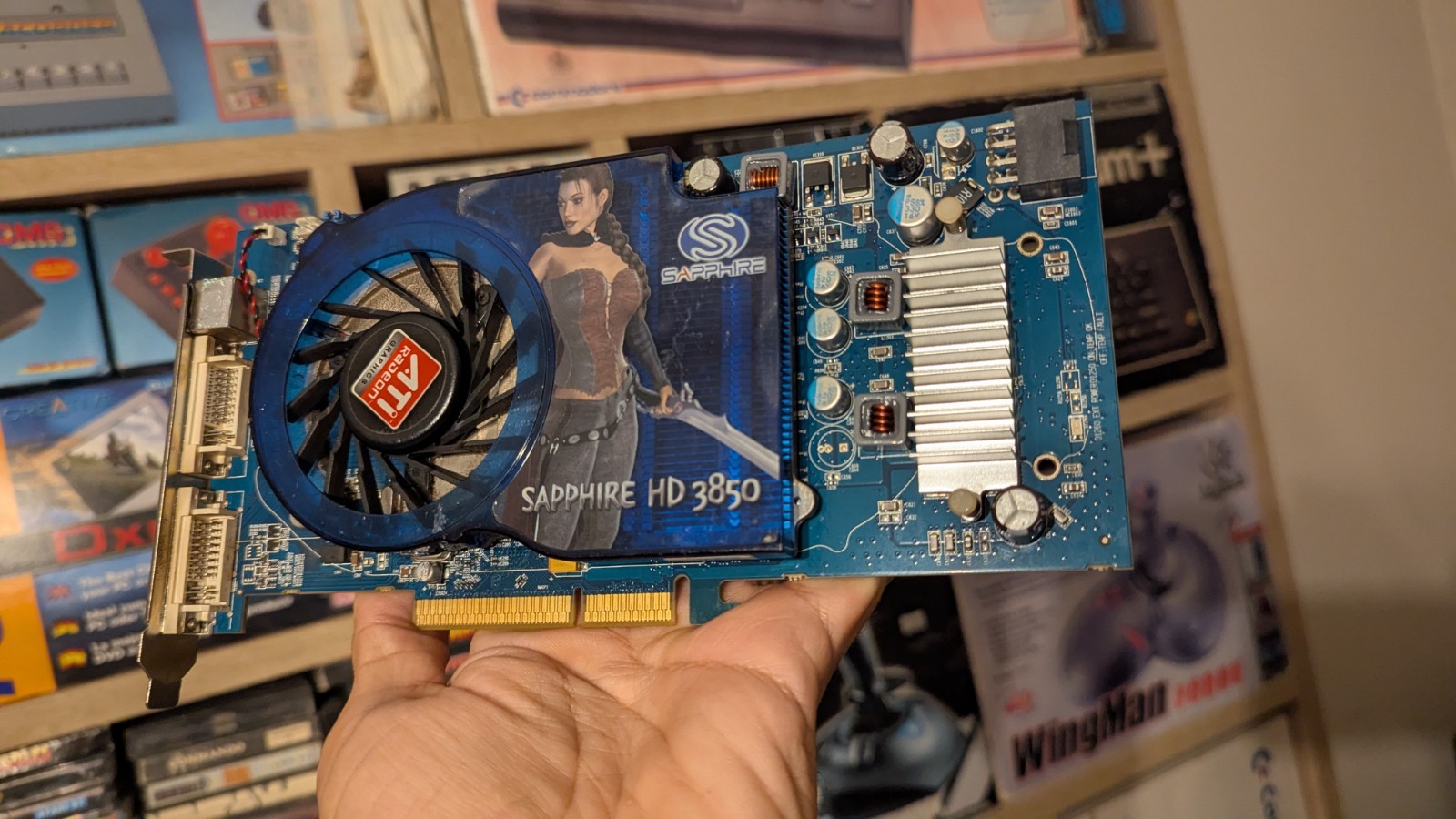
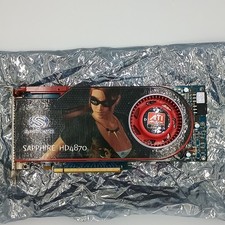
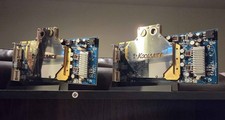
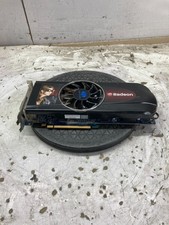
Cleansed, lubricated, thermal cream on GPU replaced and tested via 3D Markt.
Faster AGP produced
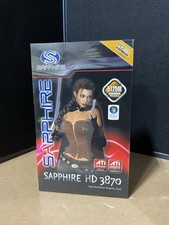
Great Packaging.
The ATI Radeon HD 3850 AGP is widely regarded by vintage PC builders and hardware collectors as the fastest and most powerful graphics card ever produced for the legacy AGP bus. Released in early 2008, this card allowed users with older AGP-based motherboards to run games from the DirectX 10 era that would otherwise be unplayable.
Core Specs & Architecture
• GPU Architecture: Based on the RV670 chip (55nm process). It features 320 shading units, 16 texture mapping units (TMUs), and 16 ROPs.
• Clocks & Speed: The core operates at 668 MHz.
• Memory: Typically equipped with 512 MB GDDR3 memory running at 828 MHz (1656 MHz effective) over a wide 256-bit memory bus.
• API Support: Fully supports DirectX 10.1 and OpenGL 3.3.
The PCIe-to-AGP Bridge
The RV670 GPU was natively designed for the newer PCI Express (PCIe) interface. To make it work on older systems, manufacturers used an ATI Rialto bridge chip on the back of the card to convert the PCIe signals to AGP 8x.
Because of this bridge, the card has a few unique quirks:
• High Temps: The bridge chip itself lacks active cooling and can run very hot, often hitting 80–85°C.
• Feature Limits: Unlike its PCIe twin, the AGP version does not support native audio pass-through via HDMI adapters and lacks CrossFire multi-GPU support.
• Driver Quirks: Official AMD Catalyst drivers often required a specific "AGP Hotfix" to recognize the card properly under Windows XP and Windows 7.
Power Requirements
Despite being a legacy AGP card, its modern architecture means it draws significant power. It has a maximum TDP of 75W. It requires external power via an 8-pin PCIe power connector (though some custom board partner versions used a 6-pin or dual Molex setup). A high-quality power supply of at least 400–450W is highly recommended