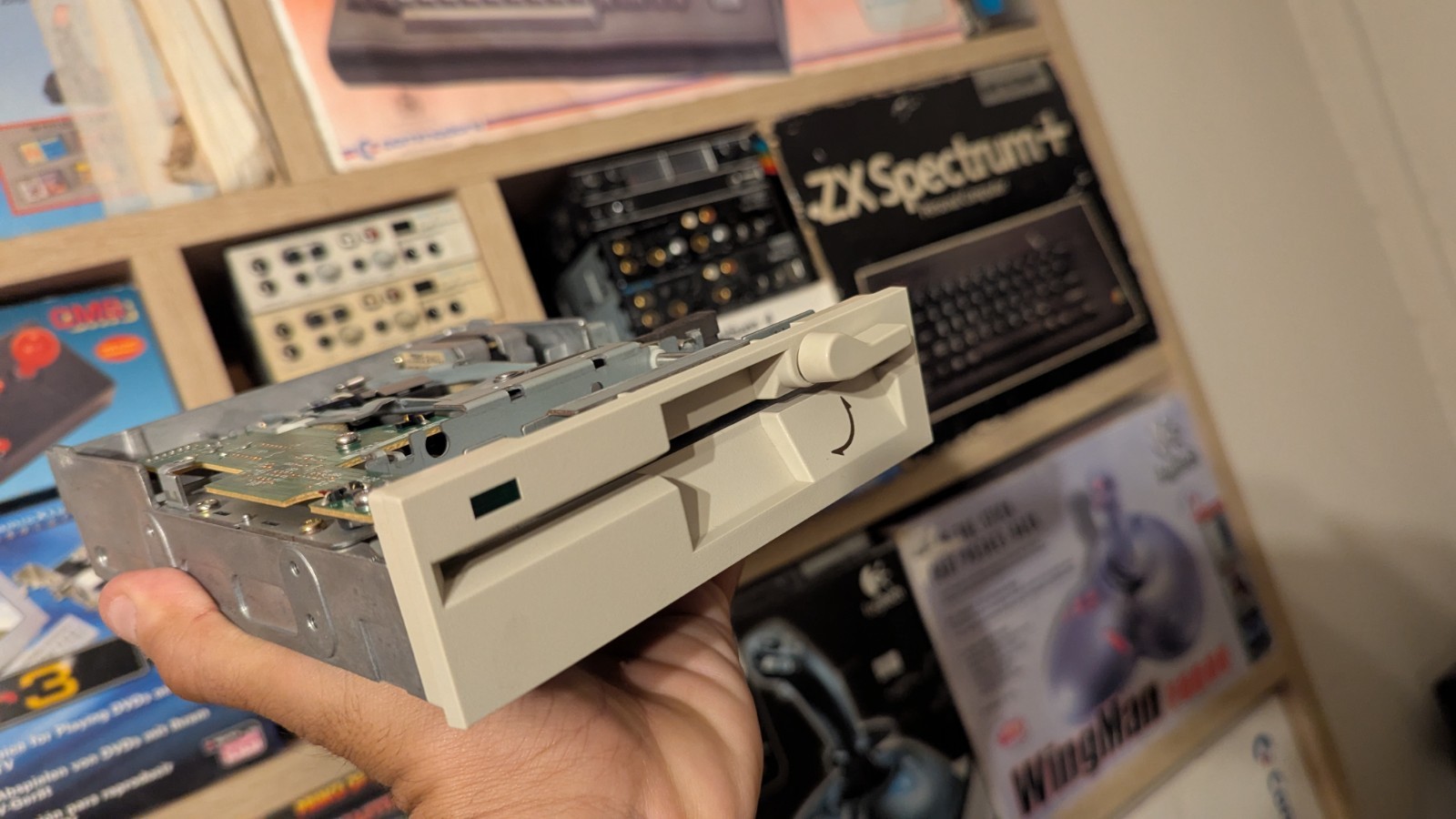
Cleaned and lubricated
Works fine
Creat Packaging
The TEAC FD-55GFR 193-U is a classic 5.25-inch High-Density (HD) internal floppy disk drive that was highly popular in the IBM PC/AT clone era of the late 1980s and 1990s. It is a legendary piece of vintage hardware known for its reliability and wide compatibility with legacy formats.
Core Specifications
• Form Factor: Standard 5.25-inch half-height drive bay.
• Capacity: Supports 1.2 MB formatted (1.6 MB unformatted) high-density disks, as well as downward compatibility with older 360 KB double-density disks.
• Interface: Standard 34-pin PCB edge connector. It requires a traditional floppy ribbon cable with a card edge slot rather than the pin-header connector used by later 3.5-inch drives.
• Power Requirements: Uses a standard 4-pin Molex power connector requiring both +5V and +12V rails.
• Rotational Speed: Operates at 360 RPM for High-Density mode (500 kbps data rate) and can switch to 300 RPM for legacy compatibility modes depending on jumper configuration.
• Track Density: 96 Tracks Per Inch (TPI) with 80 tracks per side.
The Importance of Jumper Settings
The "GFR" series is famous among retro-computing enthusiasts because the back of the drive features a complex PCB grid of jumper blocks (straps such as DS0-DS3, LG, I/II, RY/DC). These allow you to manually configure:
• Drive Select (DS): Setting the drive as Drive A: or Drive B:.
• Disk Change / Ready Signal (RY/DC): Vital for telling vintage PCs or non-PC systems (like the Commodore Amiga or retro synthesizers) whether a disk has been swapped or if the drive motor is ready.
• Speed/Density Modes: Determining how the drive handles the speed distinction between high-density and double-density media.